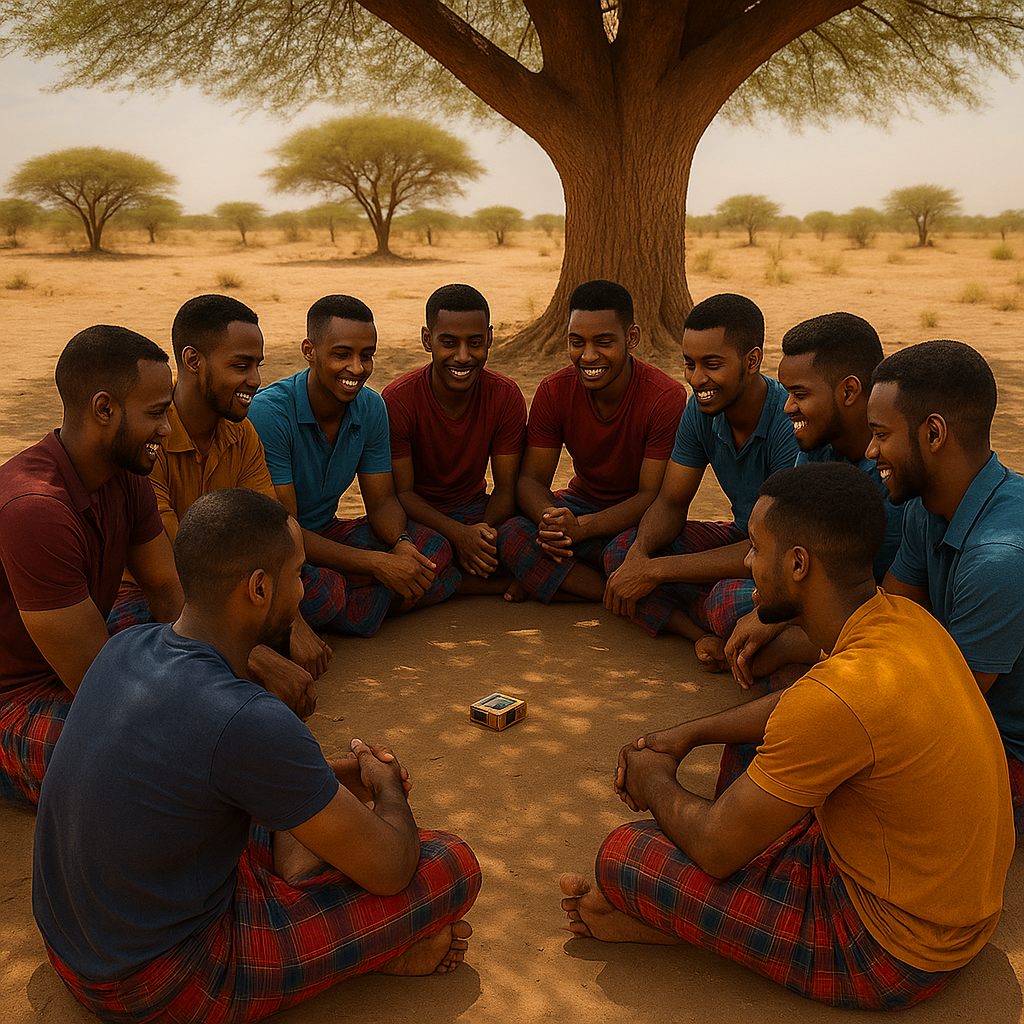
Origins: A Game Born From Simplicity
Taraq is one of the most iconic traditional Somali games — a simple matchbox flip that carries decades of history, laughter, and community bonding. It began with Somali youth who used everyday items to create entertainment during long afternoons spent herding animals or relaxing under the shade of an acacia tree.
The matchbox was everywhere in Somali homes, so children naturally turned it into a game. What began as a simple flip between two friends became a widespread cultural tradition. The name “Taraq” itself comes from the Somali word meaning “to throw” or “to flip.”
Why Taraq Spread Across Somalia
The game grew popular quickly because:
- It required no equipment except a matchbox.
- Anyone could play — kids, elders, boys, girls.
- It could be played anywhere: sand, concrete, a mat, or dirt roads.
- It created instant social gatherings wherever it was played.
Nomads played during rest stops, city kids played after school, and elders played during tea breaks. Taraq became one of the most accessible and beloved social games in Somali society.
The Rules: Three Simple Outcomes
Taraq is played by flipping a matchbox into the air and scoring points depending on how it lands:
- Vertical (standing straight) → 10 points
- On its side (horizontal) → 5 points
- Flat (normal position) → 0 points
While the rules look simple, the strategy and excitement make the game addictive. Some players learn how to throw the matchbox in a specific way to increase their chances of landing on the high-scoring sides.
Strategy, Skill, and Luck
Taraq is a mix of luck and real skill. Players consider the wind, the type of ground, and even the condition of the matchbox. Old boxes flip differently than new ones, and a slightly bent box can change everything — leading to debates, jokes, and endless fun.
Taraq as a Social Gathering
Like many Somali traditions, Taraq brings people together. The game is almost always played in a circle with cheering, laughing, joking, and celebrating every dramatic flip. It became a way for:
- Youth to compete and bond.
- Elders to tell stories while watching.
- Families to connect during evenings.
- Neighborhoods to host friendly competitions.
The Nomadic Connection
For Somali nomads, Taraq offered entertainment during long journeys or quiet evenings at the camp. Herders sometimes played Taraq while resting with their animals. Elders used the game to teach:
- Patience
- Fairness
- Strategic thinking
- Respect for others
It became more than a game — it was part of Somali oral teaching.
Taraq in the Cities
In cities like Mogadishu, Hargeisa, Garowe, Kismayo, and Baidoa, Taraq became the Somali version of street games. Kids played in alleys and open areas after school. Some players even shaped sand into a small “Arena” to get better flips.
Taraq in the Diaspora
As Somalis migrated across the world, they took the game with them. Children in Europe, North America, and the Middle East play Taraq in parks, apartments, or during Somali cultural gatherings.
For many diaspora youth, Taraq is a powerful connection to their heritage — a game they learned from their parents or relatives during visits back home.
The Digital Evolution of Taraq
Today, Taraq has moved into the digital world. Somali developers have started creating mobile and web versions of the game, complete with animations, sound effects, and online multiplayer features. These new versions keep the heart of the original game alive while making it accessible across the globe.
Why Taraq Matters
Taraq represents Somali culture in many ways:
- Creativity: Turning a simple matchbox into a full game.
- Community: Bringing people together of all ages.
- Tradition: Passed down through generations.
- Identity: Connecting diaspora youth with Somali heritage.
Conclusion
From the sandy villages of Somalia to modern smartphones, Taraq has survived because it is simple, fun, and meaningful. It carries Somali memory, creativity, and community spirit. Whether flipped on the ground or tapped on a screen, the heart of Taraq remains the same:
- Flip the box
- Score the points
- Laugh together
- Celebrate the moment
Taraq is not just a game — it is a cultural treasure.
Related Articles:
How to Play Tuug iyo Askari •
Why Somali Social Games Are Fun and Culturally Unique